The OTT industry actually looks exciting from the outside; fast growth, recurring revenue models, and direct access to the audience globally. However, behind every successful streaming platform is a strong backbone that users never see.
When someone taps “Play,” a complex chain of systems gets activated instantly: user authentication, subscription validation, video quality selection according to bandwidth, encrypted content delivery from the nearest server, and real-time performance monitoring. All of this must happen in seconds without even any failure.
That’s the real foundation of OTT platform development. It’s not just about a polished interface or even subscription features. Over and above that, it’s about building a scalable, secure, and high-performance system that can smartly handle traffic spikes, protect licensed content, and stream smoothly across devices.
Numerous platforms like Netflix, Amazon Prime Video, and Disney+ deliver consistent performance just because their architecture is built for scale from the very first. In this blog, we’re going to explore how OTT platforms are built, the technology stack behind them, along with the key architectural decisions that decide whether your streaming business grows steadily or struggles under demand.
Why OTT Platform Development Is More Complex Than It Seems
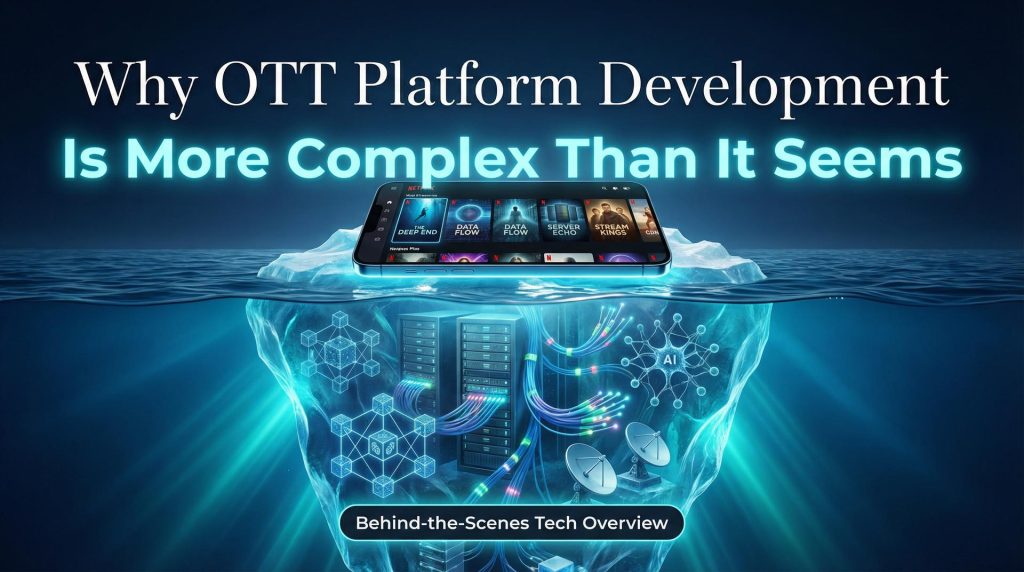
When businesses explore OTT platform development, most of the people assume that it’s primarily about launching a streaming app. But in reality, building a dependable system truly needs deep planning around architecture, scalability, and performance. Here are more reasons why building an OTT application is more complex than it seems:
Delivering Buffer-Free Streaming at Scale
When it comes to streaming millions of videos simultaneously, it requires adaptive bitrate streaming, optimized encoding, along with integration of CDN in order to ensure playback regardless of fluctuating user bandwidth conditions.
Ensuring Seamless Multi-Device Compatibility
A successful platform should work consistently across web, Android, iOS, smart TVs, Fire TV, and Roku, demanding synchronized APIs, responsive UI frameworks, and cross-platform optimization.
Handling Traffic Surges During Peak Events
Live sports, premieres, or sometimes special events can suddenly increase concurrent users and make auto-scaling cloud infrastructure and load balancing an essential part of video streaming app development.
Protecting Premium Content from Piracy
Strong DRM (Digital Rights Management) systems, encrypted streaming protocols, and tokenized access controls are essential in order to avoid unauthorized downloads and content leads.
Managing Subscriptions, Payments, and Analytics
Beyond streaming, platforms must integrate secure payment gateways, recurring billing systems, and user authentication, as well as real-time analytics, in order to track engagement and revenue performance effectively.
What Happens If the Architecture Isn’t Built for Scale?
Buffering and High Latency
Poor infrastructure leads to slow loading times and consistent buffering, frustrating users and reducing overall time significantly.
App Crashes During Live Events
If your apps don’t have a scalable backend system, then sudden traffic spikes during live streams can overload servers and crash the whole platform.
Increased Churn and Negative Reviews
Unstable streaming experiences push users to competitors and lead to higher churn rates and demanding public app store ratings.
Revenue Losses Due to Downtime
Each minute of service disruption during peak hours has a direct impact on subscriptions, ad impressions, and overall platform revenue.
Security Breaches and Content Leakage
If the application has a weak security architecture, then it can increase vulnerability to piracy. unauthorized access, and potential loss of premium licensed content.
Performance Impacts Retention and Brand Trust
Actually, consistent streaming performance builds loyalty. On the other hand, technical failures immediately erode user trust and long-term brand credibility.
How OTT Platforms Are Built: The Complete Architecture Breakdown
In order to truly understand OTT platform development, you need to see how each architecture layer actually works together to drive fast, secure, and scalable streaming. Below, we break down the complete OTT platform architecture and cover everything from content ingestion and video processing to backend systems, CDN delivery, and cloud infrastructure that power modern streaming platforms:
Content Ingestion Layer
Every OTT system starts with content ingestion. Raw media files like movies, shows, and live recordings are uploaded to highly scalable cloud storage environments that are specially designed in order to handle massive volumes of data. This storage ensures durability, redundancy, and fast retrieval.
At the same time, media asset management organizes metadata such as titles, categories, thumbnails, and subtitles, along with licensing rights. Clean metadata structuring always enhances content discovery, search accuracy, and recommendation engines and forms the foundation of an efficient streaming ecosystem.
Video Processing & Transcoding
Raw files are rarely optimized for streaming. During OTT platform development, videos are transcoded into several resolutions that range from low-bandwidth formats to full 4K. Now, this ensures compatibility across devices and internet speeds.
Advanced encoding standards such as H.264 and H.265 compress files efficiently and maintain the quality smartly. Adaptive bitrate streaming then automatically adjusts video quality in real-time according to network conditions and prevents and delivers a seamless viewing experience.
Packaging & Streaming Protocols
After transcoding, videos are packaged using streaming protocols like HLS or MPEG-DASH. These protocols break content into small segments and allow the player to add content in chunks instead of as a single heavy file.
Segment-based delivery reduces startup delay, allows instant quality switching, and improves playback stability, which is a critical component in modern video streaming app development.
Content Delivery Network (CDN) Lay
CDNs (Content Delivery Networks) are actually responsible for distributing video content globally. Rather than serving content from one central server, these delivery networks cache video segments across edge servers worldwide and deliver streams from the nearest location to the viewer.
This latency improves load times significantly. Numerous platforms utilize a multi-CDN strategy that’s combined with intelligent load balancing and traffic routing in order to ensure redundancy and maintain uptime during demand or live events.
Backend Infrastructure
The backend works as the operational core of the platform. When it comes to modern OTT platforms’ architecture, it relies on microservices, where independent services handle authentication and subscriptions, recommendations, content management, and analytics.
API gateways securely connect frontend apps to backend systems. Subscription management modules handle recurring billing and upgrades and integrate payment gateways to process transactions securely. Databases store user profiles and watch history, as well as behavioral data, and enable personalization and real-time insights.
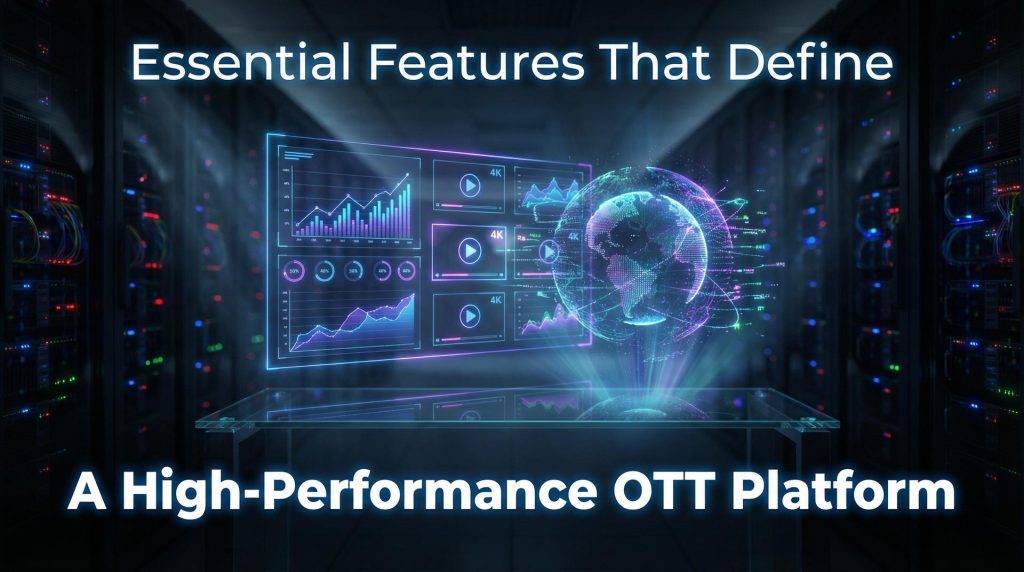
Essential Features That Define a High-Performance OTT Platform
Adaptive Bitrate Streaming
It can adjust video quality according to real-time bandwidth conditions and ensure buffer-free playback across devices and network speeds in an advanced OTT platform architecture.
AI-Powered Recommendation Engines
Utilizes machine learning algorithms to analyze and comprehend user behavior and deliver personalized content suggestions and increase engagement and retention in modern OTT platform development.
Multi-Device Synchronization
Allows seamless content access across web, mobile, and smart TVs, along with synchronized watch progress and user preferences stored in centralized backend systems.
Watch History & Resume Playback
Tracks viewing activity in real time, enabling users to start content exactly where they left off and enhancing user experience in the video streaming app.
Download for Offline Viewing
This feature allows secure content downloads with encrypted storage, enables uninterrupted viewing without internet connectivity, and maintains DRM protection standards.
Multi-Language Audio and Subtitles
The multi-lingual audio and subtitles feature supports a diverse audience as it integrates several audio tracks and subtitle files within the streaming workflow for global content accessibility.
DRM and Content Encryption
Implements secure digital rights management and token-based encryption protocols in order to avoid piracy and unauthorized distribution of premium media.
Real-Time Analytics Dashboards
Provides actionable insights into user behavior, streaming performance, churn rate, and revenue metrics through integrated backend analytics systems.
Push Notifications and Engagement Tools
Brings user retention through personalized alerts, content updates, and behavioral triggers integrated within the OTT platform ecosystem.
The Technology Stack Behind Modern OTT Development
A successful OTT platform development strategy relies solely on choosing the right technology stack. Each layer, from frontend to cloud infrastructure, must perfectly work together in order to ensure scalability, performance, and security.
Frontend Technologies
Frameworks such as React and Flutter allow responsive web and cross-platform apps. On the other hand, Swift (iOS) and Kotlin (Android) ensure optimized native performance for seamless streaming experiences.
Backend Technologies
Node.js and Java, along with Python, power scalable APIs, microservices, authentication systems, and real-time data processing within a strong OTT platform architecture.
Databases & Caching
SQL and NoSQL databases manage user data, subscriptions, and metadata. Whereas caching systems like Redis reduce latency and improve response times during high traffic.
Cloud Providers
Platforms like AWS, Azure, and Google Cloud provide auto-scaling infrastructure, global deployment, and high availability essential for video streaming app development.
Streaming & Media Services
Media servers and encoding pipelines, as well as DRM systems ensure efficient video processing and secure content delivery and protect playback across devices.
Real-World Scenario: Handling a Sudden Traffic Surge
During a live sports final or major launch, millions may log in within minutes. Strong OTT platform development ensures the system stays stable under pressure.
| Challenge | Behind the Technology | Result |
| Sudden user spike | Auto-scaling adds servers instantly | No crashes or downtime |
| Heavy API traffic | Load balancers distribute requests | Stable performance |
| Regional demand surge | CDN edge servers deliver nearby content | Low latency streaming |
| Streaming overload | Adaptive bitrate adjusts quality | Buffer-free playback |
| Performance issues | Real-time monitoring triggers alerts | Quick issue resolution |
Off-the-Shelf OTT Builders vs Custom OTT Development
Prebuilt OTT Platforms
Readymade solutions sometimes look convenient at first. However, they mostly come with some serious limitations. In this solution, scalability is restricted, customization alternatives are also limited, and you have to be dependent on the provider’s ecosystem and roadmap.
Numerous platforms also operate on revenue-sharing models, which makes a direct impact on long-term profitability.
As your audience grows, performance bottlenecks, integration challenges, and branding constraints can hold your streaming business back.
Custom OTT Development
On the other hand, custom OTT platform development provides you with full control over architecture, scalability, and overall performance optimization. You can implement customized monetization models (SVOD, AVOD, TVOD) and integrate seamlessly with current business systems while building a differentiated brand experience.
Over time, custom development proves more cost-efficient, secure, and adaptable, and it makes it the smarter choice for serious streaming businesses that are aiming for sustainable growth.
Conclusion
Building a streaming application is no longer just about launching a video platform. Beyond that, it’s also about developing a scalable digital ecosystem that can handle growth, protect premium content, and deliver a seamless experience across devices.
Everything, from content ingestion and transcoding to CDN distribution, cloud-auto scaling, and advanced analytics, every layer of OTT platform development directly impacts user retention, revenue scalability, and brand credibility.
If you invest in the right architecture today, then you can position yourself for long-term success in an increasingly competitive streaming market. And, if you’re also planning to build a high-performance, future-ready solution, then partnering with an experienced technology team like Mypcot Infotech can make all the difference.