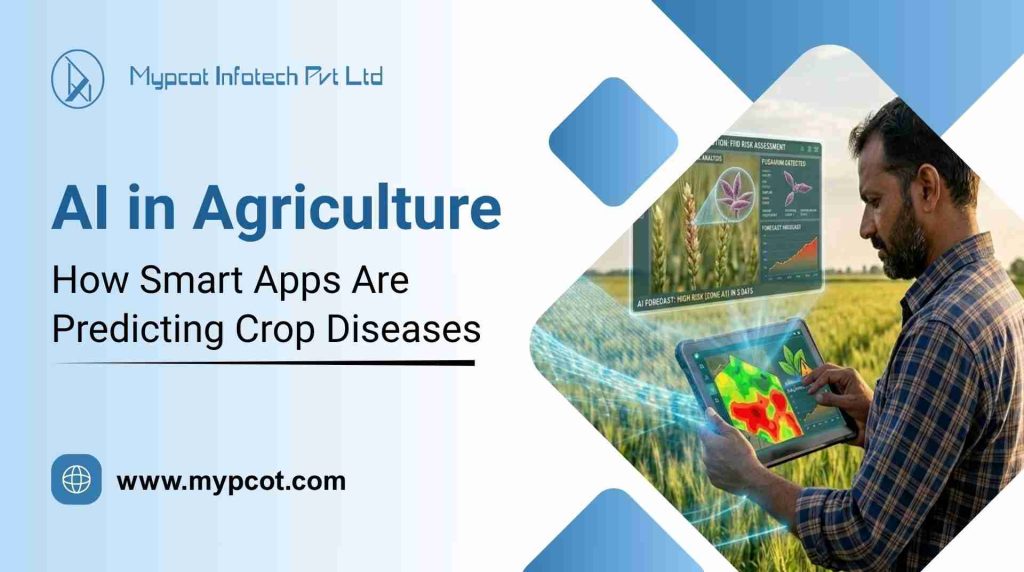
A single undetected disease can silently spread across a field and then wipe out weeks of hard work. Actually, the real challenge isn’t just treating the disease. Also, it’s about spotting them at the right time. This is where AI in agriculture proved itself to be a game-changer, especially with the rise of smart apps designed in order to monitor crop health with surprising accuracy.
Through some tools like smartphones, these apps identify patterns, analyze conditions of plans, and then warn farmers before even the problem turns out of control.
In this blog, we’ll explore how AI in agriculture is used in order to predict crop diseases, how these smart applications actually work, their key benefits, some of the real examples, and what farmers exactly need to know before getting started.
Table of Contents
ToggleWhat is AI in Agriculture and Why It Matters Today?
In essence, AI in agriculture is simply the application of newer technologies that include machine learning (ML), computer vision, and even data analytics in a bid to make farming more precise and effective.
Instead of relying on old practices or trial and error, AI systems can be intelligent about large amounts of data on crop images, weather conditions, soil health, and field sensors to provide real-time information. This not only aids farmers in monitoring their crop, but it also enables farmers to foresee the danger associated with the crop, to optimize the farmers’ resources, and make better decisions at each stage of farming.
- The current challenges that farming is facing make this change necessary:
- Weather and climatic change are of an unpredictable nature.
- Growing pest attacks and crop diseases.
- The deterioration of the soil and the water shortage.
- Increased prices and low profit margin.
And that is exactly where AI can be really useful. Using precision agriculture technology and AI-driven farming tools, farmers detect issues earlier, lessen their waste, and increase productivity. No matter whether it is the question of detecting a disease before it spreads, or even the most efficient use of resources like water and fertilizers, AI is making farming even more efficient, reliable, and future-oriented.
How AI in Agriculture is Transforming Crop Disease Detection
1. Traditional vs AI-Based Detection
Traditionally, crop diseases are identified through just manual inspection and the experience of farmers. This approach mostly depends on visible symptoms, which generally appear after the disease has already spread.
On the other hand, AI in agriculture utilizes technologies such as computer vision and plant disease prediction AI in order to scan crops, analyze patterns, and detect issues at a much earlier stage. This approach makes the process faster, more accurate, and less dependent on guesswork.
2. Early Detection
Crop diseases spread quickly and silently. A large part of the crop may be damaged before the visible signs are detected.
In this case, timely diagnosis can enable the farmers to take immediate steps and ensure that the disease does not extend further. Using AI-based insights, farmers can use specific treatments in parallel, mitigate the harm, and prevent the needless application of pesticides.
3. Impact on Yield and Profit
The most significant benefit of AI in agriculture as a disease-detecting tool is that it directly affects productivity and income. In fact, the healthier crops will result in increased yield and quality produce, and it will raise the market value.
At the same time, early intervention decreases input expenses like pesticides and labor. Such a combination of increased productivity and reduced costs assists farmers in achieving better overall profitability and makes the farming process even more efficient and sustainable.
Top Features of AI-Powered Agriculture Apps
AI-powered agriculture applications are specially designed to make complex farming decisions simple and bring real-time insights directly to a farmer’s smartphone, often built by an experienced app development company to ensure performance and usability.
These tools combine data, analytics, along with AI-powered farming tools in order to make crop management more precise and efficient. Here are some of the most valuable features that are transforming everyday farming:
1. Real-Time Disease Alerts
One of the most powerful features is immediate disease detection. Farmers can scan crop images, as well as the app immediately identifies potential infections through AI crop disease detection models. Now, this allows immediate action before even the disease spreads across the field.
2. Weather-Based Predictions
These applications use weather data and predictive algorithms and warn farmers regarding conditions that may lead to diseases or crop stress. From rainfall forecasts to temperature changes, farmers can plan irrigation, spraying, and harvesting even more effectively.
3. Soil Health Insights
Healthy soil is the primary factor for good yield. And, AI applications analyze soil data to provide insights on nutrient levels, moisture content, and deficiencies. This helps farmers apply the right fertilizers in the right quantity, and reduces waste and improve quality of the crop as well.
4. Pest Detection
Besides diseases, another significant factor that should be treated is pests. The AIs can identify an infestation of pests at the initial stage by merely examining the patterns and their visual indicators. This assists farmers to act in a specific direction instead of over-applying pesticides.
5. Crop Advisory Recommendations
These applications not only identify the problems, but they also provide farmers with many handy solutions. According to the data collected, they can offer recommendations on how to treat crops, schedules of irrigation, and best practices, and make farming even more knowledgeable and outcome-based.
Real Examples of AI in Agriculture Apps Used by Farmers
Several AI in agriculture apps are already helping farmers make better decisions on a daily basis. Here are a few widely used ones:
- Plantix
This application allows farmers to click photos of their crops and immediately detect diseases, pests, or even nutrient deficiencies. Furthermore, it provides treatment suggestions and makes it a practical tool for AI crop disease detection.
- CropIn
CropIn focuses on farm management through data and analytics. Through this advanced app, farmers can monitor health, field activities, along with the use of predictive insights in order to improve yield and reduce risk.
- AgriApp
AgriApp provides expert-backed guidance on crop care, pest control, as well as farming practices. It blends advisory services with digital tools to support farmers in making informed decisions throughout the crop cycle.
Many of these advanced solutions are made possible with the support of experienced AI development companies that build intelligent and scalable farming applications.
Key Benefits of Using AI in Agriculture for Farmers
When you adopt AI in agriculture, it’s not all about technology. Over and above that, it’s something that directly improves farmers’ management of their crops and resources. Here are some of the key benefits:
- Early Disease Detection
AI tools have the potential to identify diseases that crops suffer from at an early stage, when visible symptoms appear. Now, this helps farmers take timely action and avoid large-scale damage.
- Reduced Pesticide Use
With accurate detection and targeted treatment, farmers no longer need to spray pesticides in high amounts. It not only lowers cost, but also supports healthier and even more sustainable farming.
- Higher Crop Yield
AI helps maintain better crop conditions, and this leads to improved yield and quality of produce.
- Cost Savings
Efficient utilization of resources such as water, fertilizers, and pesticides reduces unnecessary expenses. Early problem identification also lessens losses and improves overall profitability.
- Better Decision-Making
Through real-time data and insights from AI-powered farming tools, farmers are able to make informed decisions at every stage, from planting to harvesting, with greater confidence.
Conclusion
AI is no longer a future concept in farming. The reason is that already it is farming the way crops are tracked, insured, and controlled. To keep farmers safe, to increase their harvest, and to make the right decisions on a daily basis, every step, starting with the detection of the disease in its initial stages, up to smarter management of the resources, AI in agriculture is assisting farmers.
What was once more or less a matter of guesswork is becoming more exact and, in fact, more data-driven and reliable.
To find smarter, practical solutions in this space, get in touch with Mypcot Infotech and make the next move towards intelligent farming.