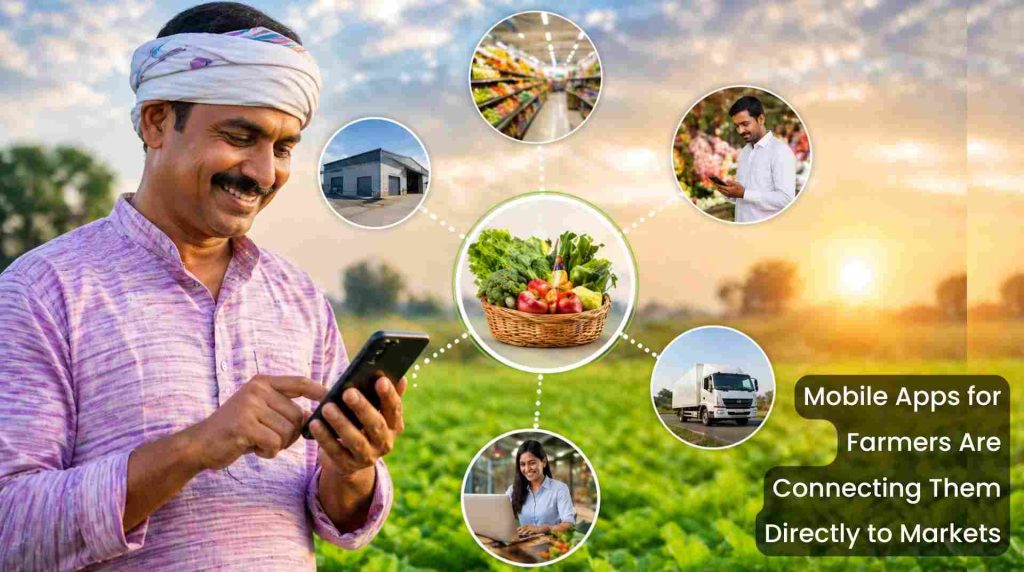
For several decades, farmers have actually depended on traditional market systems where middlemen, limited access to buyers, along with lack of price transparency have mostly reduced their overall earnings. Selling produce was not just time-consuming, but also uncertain, as farmers had little control over final pricing. Nowadays, mobile apps for farmers are gradually transforming this experience.
This is because it enables a direct link between farmers and buyers, and makes the process even more transparent, efficient, and accessible. With the help of these digital platforms, farmers are able to check real-time prices, reach wider markets, and receive faster payments without even relying on intermediaries.
In this blog, we’ll get insights into how mobile apps are connecting farmers directly to markets, how these platforms work, their key benefits, popular apps in India, and more. Just take a deep dive.
Table of Contents
ToggleThe Traditional Agricultural Supply Chain Problem
For a long time, farmers have been selling their crops through a system that involves several middle layers before even the produce arrives at the final buyer. Although this setup may be helpful in distribution, it often puts farmers at a disadvantage when it comes to earnings and control.
Role of Middlemen
In most of the cases, farmers sell their produce to local traders or sometimes agents rather than directly to buyers. And, these middlemen then pass it along to others in the chain. So, at every step, a portion of the profit is taken. It means the farmers get less than what exactly the produce is actually worth in the market.
Price Manipulation and Delays
Many farmers don’t have clear information about the current price currently running in the market. Due to this, they get dependent on what traders offer, and it’s not always fair. On top of that, payments are not always made immediately, and then delays make it difficult for farmers in order to manage their daily expenses.
Limited Market Access for Farmers
Another issue is that farmers are often limited to nearby markets. They can’t reach those buyers even if they get better prices in other areas, due to a lack of access, information, or proper support.
What Are Mobile Apps for Farmers?
Mobile apps for farmers are just simple digital tools. These applications help farmers manage different parts of their work through their smartphones. Apps are actually designed in order to make farming even more informed, efficient, along with connected. Everything from checking market prices to selling produce or even getting expert advice, farmers are able to access useful services without even being dependent on local sources.
These apps are generally easy to use and are developed keeping farmers’ everyday preferences in mind. Even farmers with basic smartphone knowledge can use them in order to improve their decision-making and reach better opportunities, often built by a mobile app development company in India to meet local farming needs.
Types of Apps
Through these apps, farmers can directly reach buyers such as wholesalers, retailers, and even consumers. They can also advertise their products, view market prices, and communicate with buyers, all without the help of middlemen.
- Advisory Apps: Advisory apps provide useful information related to agriculture. This can be information about weather, crop recommendations, pest control measures, and more. This allows farmers to make informed decisions during all stages of farming.
- Logistics-Enabled Platforms: Some of the applications provide support with transportation and delivery. In fact, these apps help farmers to book pickups, storage, and transportation of their farm produce and make it very easy for farmers to sell their produce to markets far away from their farms.
How Mobile Apps for Farmers Connect Them Directly to Markets?
Farmers’ mobile apps are not just about information, but also about changing the selling patterns. They allow farmers to be connected to markets without having to go through several layers of middlemen. Here’s what typically happens:
1. Direct Listing of Produce
The app allows farmers to input details about the produce they grow, in terms of quantity or quality, and the price they could receive. The platform is a virtual market where farmers can sell their produce. There’s no need to physically visit mandis.
2. Real-Time Price Discovery
Probably the most important of these is real-time price data. This enables them to shop around for prices for similar goods. This enables them to receive the right price for their products and not sell at a discounted price because of information asymmetry.
3. Direct Buyer Communication
These apps often allow farmers to communicate with buyers through phone calls or chats. This helps to establish trust and allows farmers to have more control of the negotiation, sale, and purchase process.
4. Logistics and Delivery Integration
The app also offers logistics support. Once the deal is done, the app can arrange transport. The farmer can serve a wider market without being concerned about transport.
5. Electronic Payments with Speedy Settlements
Payments are generally electronic. Farmers can receive money into their bank accounts, often sooner than with other methods of payment. This means no cash-on-delivery and better cash flows.
Key Benefits of Mobile Apps for Farmers
Farm apps are helping farmers to sell their produce and make decisions without relying only on conventional methods. These apps for the agriculture market are enabling farmers to reach out and grow their earnings.
- Increased Profits: Farmers can compare prices and receive better value for their produce.
- Removal of Middlemen: Farmers can connect directly with buyers using apps that remove the middleman, thus improving profits.
- Large Market: Farmers can sell their produce in other mandis, not just their local mandi.
- Quicker Payments: Payments can be made securely and more easily online, improving cash flows.
- Better Insight into Pricing and Demand: Farmers can get better data on prices and demand to plan and make decisions.
Popular Mobile Apps for Farmers in India
- DeHaat
- Ninjacart
- AgriBazaar
- Kisan Network
- Krishify
The Role of Government and Agri-Tech Startups
Farmers’ mobile app usage is being supported by government programs and agri-tech innovation.
- Digital India Initiatives
Better internet and mobile phone coverage in rural areas has enabled farmers to access digital farming tools and markets.
- Startup Ecosystem Support
Agritech startups are developing agriculture marketplace apps to help farmers sell their produce, gain insights, and manage aspects of their farming.
- Subsidies and Awareness Programs
Training and subsidies are enabling farmers to adopt these apps and understand their value.
Tips for Farmers to Get the Most Out of Mobile Apps
- Start with one platform and understand how it works
- Compare prices regularly before selling
- Maintain consistent product quality
- Build strong relationships with buyers
Conclusion
Farmers’ mobile apps are transforming agri-trade relationships to become more direct, transparent, and efficient. These apps offer new ways for farmers to control prices and market access, and thereby their income and as more farmers use them, the effect will be even greater. If you want to develop such digital services, Mypcot Infotech can help you make smart decisions.