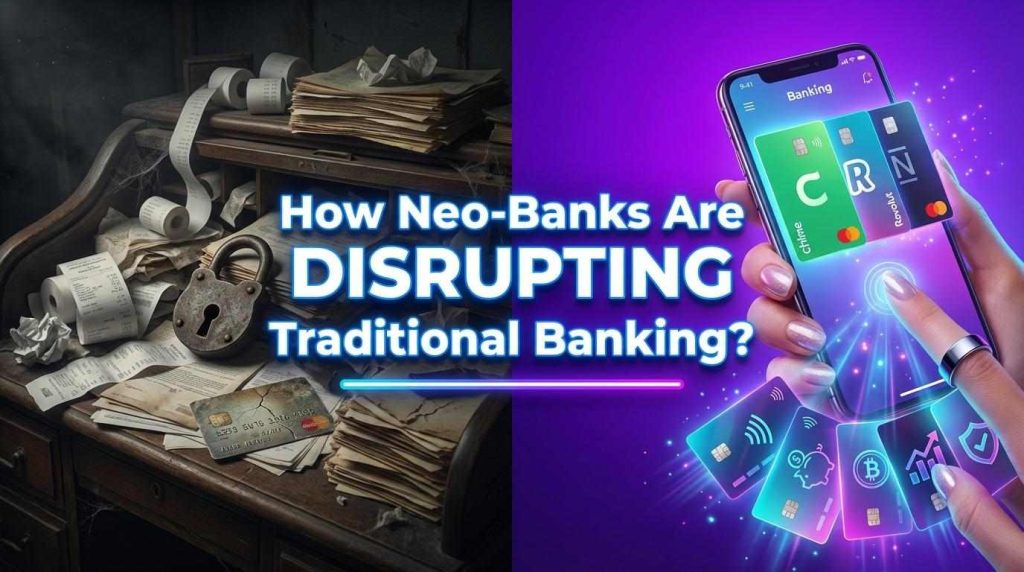
For decades, traditional banks have totally relied on branches, paperwork, along with manual processes. Actually, that model works, but it was slow, inflexible, and mostly frustrating for customers. And, Neo-banks’ mobile apps completely changed that.
These apps allow users to open accounts in minutes, make transfers instantly, track spending in real-time, and even get automated insights on savings or investing. Numerous Neo-banks also offer tools such as bill splitting, budgeting dashboards, multi-currency accounts, along with integration with several other financial services, all within a single app. Unlike conventional banks, their focus is on user experience and data-driven decision-making, which makes baking even faster, smarter, and even more transparent.
In this blog, we’ll explore what exactly neo-banks are, the key features of their apps, how exactly they disrupt traditional banks, their benefits and challenges, as well as emerging trends. Moreover, you’ll also learn why neo-bank apps aren’t just convenient; they are also changing the way people manage money.
What Are Neo-Banks? Understanding Mobile-First Banking
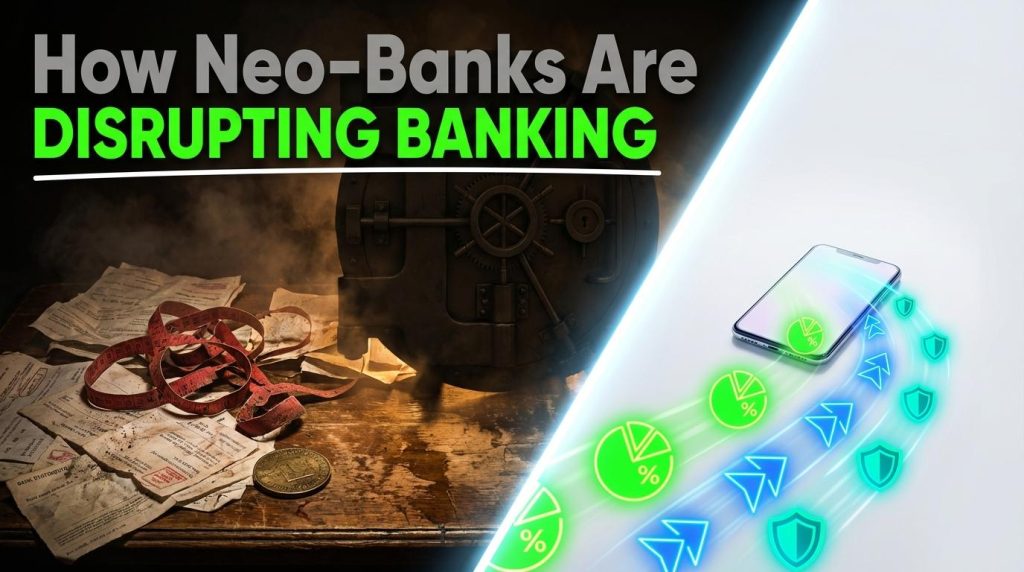
Neo-banks are fully digital banks that actually operate entirely through mobile apps and online platforms, without having any physical branches. Unlike traditional banks, they are built for mobile-first interaction, and make account opening, money transfer, as well as financial management fast, simple, and intuitive.
What exactly sets them apart is their data-driven approach. For example, Indian neo-bank Niyo provides real-time expense tracking, bill reminders, along with multi-currency wallets. Whereas, RazorpayX keeps its focus on business banking with immediate payroll and expense management tools. These applications can’t only be considered as a digital version of banks, but also they rethink banking itself, and provide financial tools, actionable insights, and a more efficient user experience.
With the smart blend of AI, analytics, and intuitive interfaces, neo-bank provides users unprecedented control over their finances, and caters to tech-savvy individuals, startups, and frequent travers who truly want faster, smarter, and even transparent baking.
Features That Make Neo-Banks Mobile Apps Stand Out
One of the biggest reasons neo-banks mobile apps are being popular in the banking is the set of features these apps offer. The features are designed around user convenience and smarter financial management. Here are the main features of the neo-banks apps:
- Real-time transactions & instant notifications:
Users can track every transaction instantly. They can receive immediate alerts for deposits, withdrawals, along with payments, and reduce errors, improving security and helping maintain accurate records. On the other hand, traditional banks mostly depend on delayed updates, and make this a key differentiator.
- AI-driven budgeting and analytics tools:
Numerous neo-banks, such as Niyo and Fi, use AI in order to categorise spending automatically, highlight unnecessary expenses, and even recommend saving strategies. Furthermore, users get actionable insights instead of just account balances, and convert their banking app into a personal financial advisor.
- Seamless KYC and onboarding:
Neo-banks enable account opening within minutes, through digital KYC processes. Unlike traditional banks, there’s no paperwork, and verification generally happens instantly through ID scans or sometimes video calls, and this is especially valuable for tech-savvy users and businesses.
- Multi-currency & global transfers:
For travelers or international businesses, neo-banks such as RazorpayX provide users with multi-currency wallets and instant global transfers at lower costs, features that traditional banks generally handle slowly and with higher fees.
- Fintech integrations:
Several apps integrate loans, investment options, insurance, and payment gateways, and offer a comprehensive financial ecosystem under just one roof. This also makes neo-banks mobile apps not just a banking tool, but a platform for handling multiple financial needs efficiently.
How Neo-Banks Are Disrupting Traditional Banking?
Neo-banks aren’t just a perfect alternative to traditional banks; Beyond that, they’re also something that is reshaping the way people manage their money. Key factors driving this disruption include:
- Convenience: These applications provide complete convenience. Users can open accounts, transfer money, and manage finances all through mobile apps, and eliminate the requirement for brand visits or paperwork.
- Cost-effectiveness: Neo banks typically charge lower fees. For example, Nio Global gives multicurrency transactions at minimal costs. RazorpayX allows startups to manage payroll and expenses efficiently.
- Personalization: AI and analytics give spending analytics insights, saving recommendations, along with personalized financial solutions; all of these all are something that traditional banks rarely used to deliver at this level.
- 24/7 Support: In-app chatbots, messaging, along with video support, ensure that help is always available, differently from banks restricted by branch hours.
- Regional Adaptation: Indian neo-banks such as Fi and Niyo design solutions that are suited to local regulations and user behaviour, and bridge gaps that global-focused competitors mostly ignore.
- Security & Compliance: Real-time fraud monitoring, secure digital KYC, along with app-based authorization make banking safer, and address issues where conventional banks lag.
Benefits of Neo-Banks Mobile Apps for Users
Neo-bank mobile apps offer a wide range of benefits that truly make managing financial tasks more convenient than traditional banking. Have a look at these benefits:
- Speed that saves time and opportunities:
Instant account setup and real-time transactions mean users can seize time-sensitive opportunities such as paying bills on time, making urgent money transfers, or even capitalizing on limited investment windows.
- Cost efficiency that impacts savings:
Transparent fees and minimal charges enable users to save consistently. Over months and years, reduced transaction costs can significantly improve personal or business cash flow.
- Data-driven financial control:
Its AI analytics don’t just track spending, but also reveal patterns, highlight unnecessary expenses and help users plan budgets effectively. And, this turns passive banking into active financial management.
- Simplified account oversight:
Consolidating multiple accounts, cards, and payments into just one dashboard reduces various mistakes, avoids missed payments, and ultimately streamlines everyday money management.
- Stronger financial security and peace of mind:
Biometric logins, fraud alerts, along with real-time monitoring safeguard funds, and provide users with confidence in order to engage fully with digital banking without even fear of loss or fraud.
Actually, these benefits make neo-banks mobile apps not just a form for transaction makers, but also they become a financial partner that help users save money, make informed choices, and manage their finances with clarity and confidence.
Challenges and Limitations of Neo-Banks Mobile Apps
- Regulatory hurdles:
Neo-banks should navigate complex banking regulations that can slow new features and expansions.
- Trust issues:
Some of the users hesitate in order to move all finances to digital-only banks due to perceived security risks.
- Limited physical branches:
Lack of in-person support can become a drawback for cash handling or sometimes for complex queries.
- Addressing challenges:
Neo-banks collaborate with traditional banks, implement advanced security, and provide hybrid support options to ensure perfect reliability.
How to Choose the Right Neo-Bank App Development Partner
Choosing the right partner can make or break your neo-bank app project. Focus on these key aspects:
- Domain Expertise
Make sure the development company has experience in building fintech or neo-banking apps. They really should understand payment gateways, KYC compliance, and financial regulations.
Technical Skills
- Look for their expertise in mobile app development frameworks (React Native, Flutter, Swift, Kotlin)
- Ability to integrate APIs for payments, transfers, and banking services seamlessly.
- Security Standards
- They must implement end-to-end encryption, secure data storage, along with fraud detection mechanisms.
- Ask them about compliance with PCI DSS, GDPR, or other relevant regulations.
- Portfolio & Case Studies
- Have a look at their previous projects for UI/UX design, functionality, and scalability.
- Also, look for apps with real-time transaction support and high user ratings.
- Support & Maintenance
- Neo-bank apps really need ongoing updates, bug fixes, and regulatory updates.
- Make sure the partner provides post-launch support and smooth app upgrades.
- Cost vs Quality
Never just go for the cheapest option. But keep your focus on value, quality, and long-term reliability.
Conclusion
Neo-banks mobile apps are reshaping the whole way we manage money by offering speed, personalization, and smarter controls over our finance related tasks. By utilizing these digital-first solutions, users can make their transactions simplified, gain insight and avail full charge of their finances.
If you’re looking to build or even enhance a neo-bank app that delivers real value, partner with Mypcot Infotech in order to turn your innovative ideas into powerful, user-friendly platforms.