
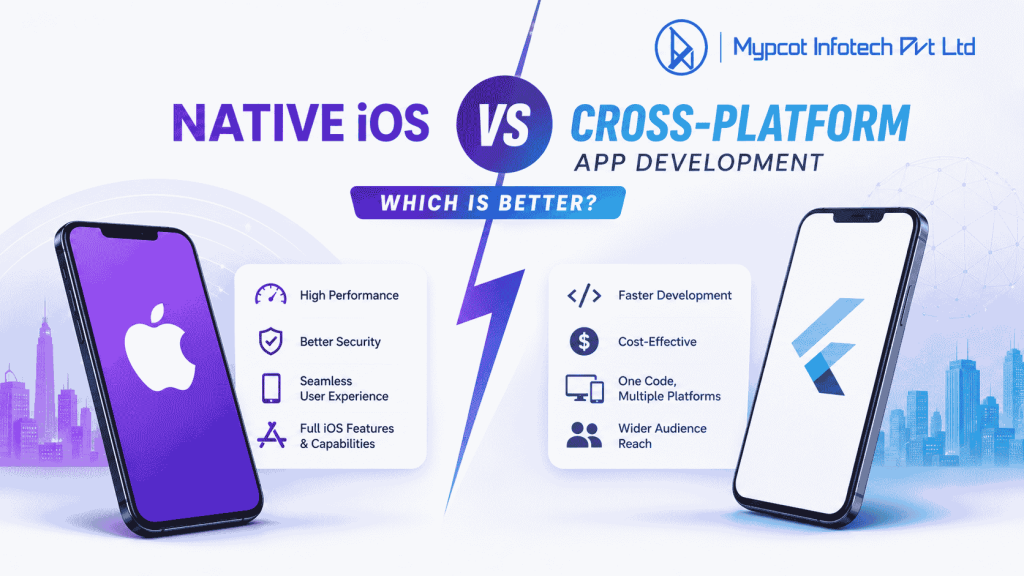
The technology behind your app can influence performance, development expenses, maintenance requirements, and future expansion. That makes the native iOS versus cross-platform development choice all the more critical than it sounds.
Native iOS Development is created for the Apple Ecosystem and provides direct access to iOS frameworks and device capabilities. While cross-platform development involves using shared codes, the approach is different, with companies creating their app for both iOS and Android using frameworks like Flutter or React Native. This can cut down on duplicate development efforts, but may not suit all types of applications.
Therefore, which way to go would be better? This depends on what users, features, budget, performance and plans for future expansion you have! This guide will explain the differences so that you can select a method that is suitable for your app and not just an app development trend.
Table of Contents
ToggleNative iOS Versus Cross-Platform App Development
Native iOS development means building an application specifically for Apple’s ecosystem. Here you use technologies like Swift and SwiftUI. As the application is designed specifically for iOS, you need to work directly with Apple’s framework and platform capabilities. Cross-platform development takes a different approach.
Frameworks like Flutter allow you to build applications for multiple platforms while sharing a significant portion of the codebase. Firstly, you must know that neither option is automatically better. The right choice depends on your target audience, complexity, budget, and performance requirements.
For example, an iPhone-first financial application with advanced security and device integrations might benefit from native development. If you are launching an e-commerce app for both iPhone and Android users, then you can benefit from cross-platform development.
Transform Your Business With the Right Technology.
Custom apps, websites & AI solutions — get a free consultation and project estimate from our Mumbai team.